Get the freshest food from your local farmers and makers, ordered easily and ready when you are.
The easiest way to eat local. Pre-order online and pick up fresh food right in your neighborhood.
What changes: demand aggregates before market day. Producers grow to real orders. Markets see real performance data. Communities buy locally with convenience.
Pre-orders turn “maybe” traffic into confirmed baskets. Markets and producers plan with clarity.
Harvest, pack, and prep to real orders. Reduce unsold inventory and last-minute scrambling.
Repeatable pickup windows and simple workflows make participation sustainable.
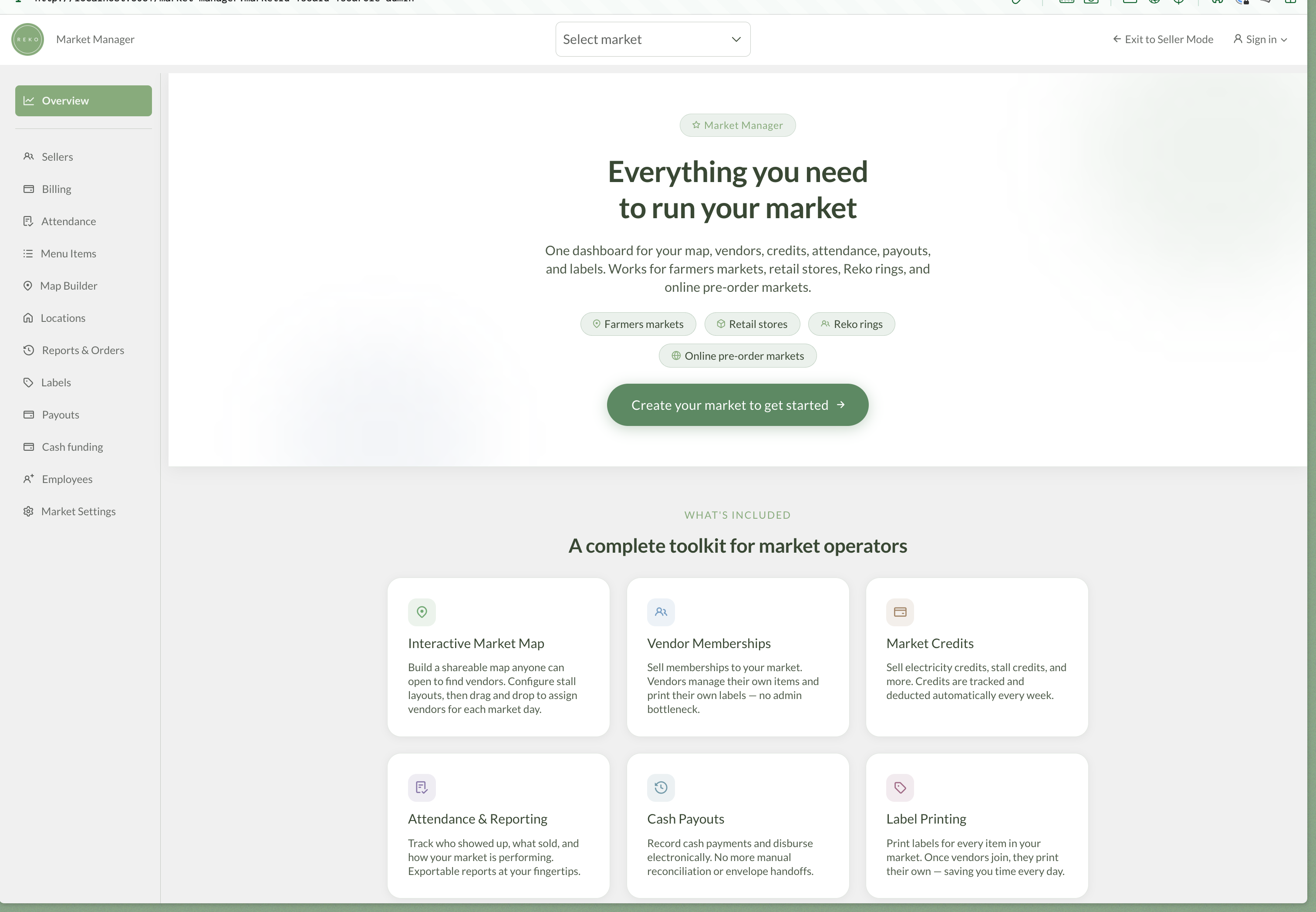
One dashboard for your map, vendors, credits, attendance, payouts, and labels. Works for farmers markets, retail stores, Reko rings, and online pre-order markets.
What's Included
Stop using spreadsheets for stall assignments. Let vendors claim their spots visually while you easily manage flow and capacity week over week.
Empower your sellers. Give them the autonomy to update inventory, print compliant labels, and manage their own participation without emailing you first.
Say goodbye to chasing down stall fees. Seamlessly process recurring electricity charges and booth rentals directly from vendor payouts.
Understand your impact. Generate instant reports on total transaction volume, vendor attendance consistency, and overall market health indicators.
Consolidate your financial flow. Move away from risky cash envelopes to secure, auditable electronic ledger disbursements for all market activity.
Ensure every product hitting the table meets health department standards. Provide standardized, automated labeling infrastructure to all your vendors instantly.
Pick the audience path that fits. Each page focuses on outcomes, workflows, and what success looks like.
Move from weather and foot traffic to predictable, pre-order driven commerce.
Plan harvest and packing to confirmed demand. Reduce waste and admin work.
Convenience without losing the relationship. Local food, made easier.
REKO supports markets, pickup hubs, and producer networks. Start with one location, then expand as demand stabilizes.